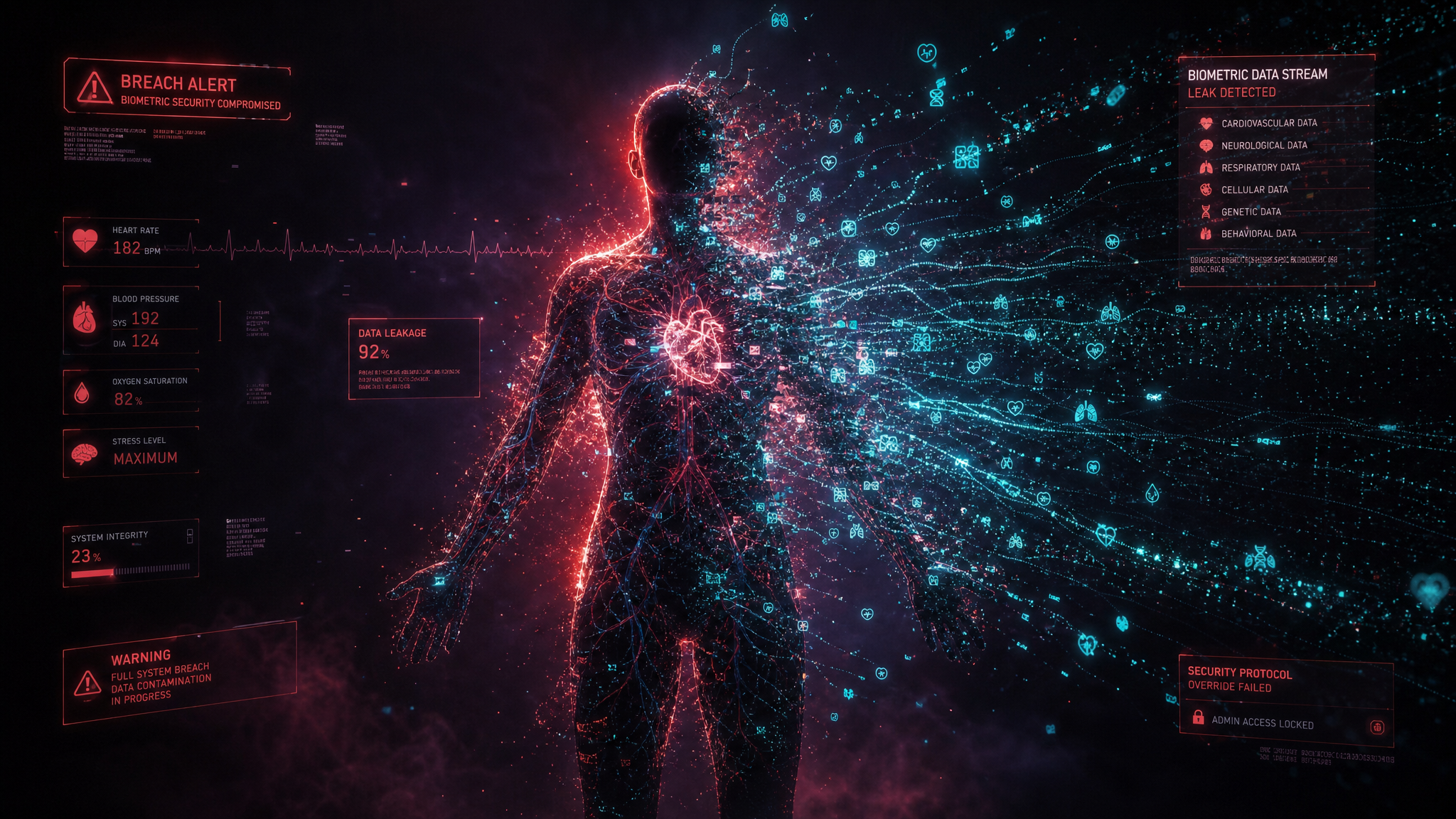
The wearable on a wrist and the app on a phone now generate the most intimate data any person produces: continuous heart rhythm, sleep architecture, activity, stress markers, reproductive cycles, and increasingly, signals that predict conditions before symptoms appear. For the Guardians tribe — the practitioners entrusted with health, safety, and longevity — the fate of this data is a defining threat, and it is largely unmanaged.
Where the data actually goes
The uncomfortable reality is that much of this biometric stream does not stay between an individual and their clinician. It flows to device manufacturers, app developers, analytics providers, and in many cases data brokers, under consent agreements few people read and fewer understand. Health-adjacent data that falls outside strict medical-privacy regimes can be legally bought, sold, and combined — and once combined, it can reveal far more than any single stream.
A leaked password can be changed; a leaked genome or a longitudinal health record cannot.
Why this threat compounds
Ordinary data breaches are bad; biometric breaches are worse in a specific way. Biometric data is permanent and predictive. A leaked password can be changed; a leaked genome or a longitudinal health record cannot. And because this data can predict future conditions, its exposure can affect insurance, employment, and autonomy for decades — often before the individual even knows what the data reveals about them. The harm is silent, cumulative, and frequently invisible until it is irreversible.
What a Guardian must do
The most intimate facts about a body are also a tradeable commodity.
Practitioners in this tribe carry a dual duty. For their own practice, they must treat the health data they hold as a high-value target and secure it accordingly — minimising collection, encrypting storage, and controlling access. For their clients, they are increasingly the trusted advisor who can explain where a device's data actually goes and help make sovereign choices about what to share. The Guardian who can navigate the biometric-privacy landscape offers something genuinely scarce: informed protection.
The sovereign standard
The principle worth holding is that an individual's biometric data should remain under their control by default, shared deliberately rather than harvested silently. The Guardians tribe is positioned to champion that standard — not as a compliance checkbox but as the core of what it means to genuinely guard someone's health in a world where the most intimate facts about a body are also a tradeable commodity.